The Matchday Programme Before Kick-Off
A matchday programme can make the fixture easier to follow and preserve its particular details; choose a printed edition, digital version or both.
Which matchday programme will help you follow the fixture now and remember it later? A matchday programme can be a printed booklet, a digital edition or a combination of the two, and each serves a different kind of supporter. Its value lies in the details tied to one occasion: team news, club voices, local notices and a record of who was there.
A programme connects useful information with the occasion
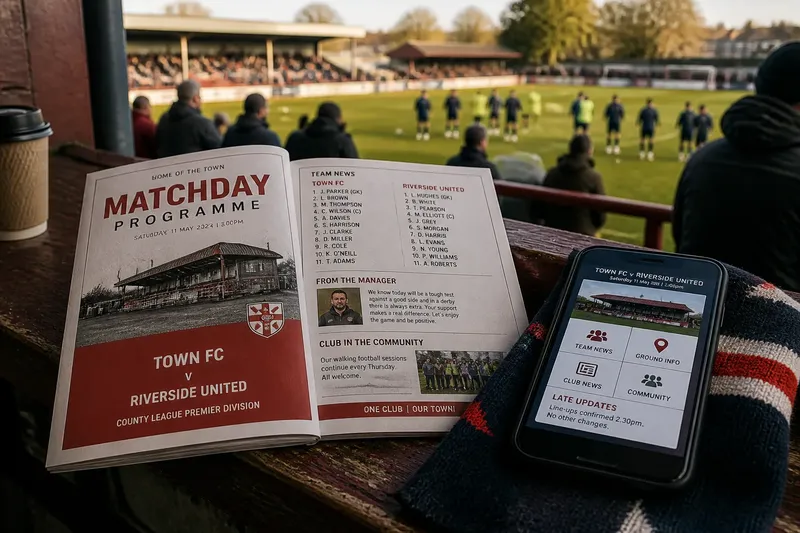
Before kick-off, a programme gives supporters something to consult while players warm up and the ground fills. A well-organised edition might include the fixture details, team line-ups when confirmed, a manager’s note, a short introduction to the visitors and information about the club’s community work. The content can help a newcomer understand who is playing and give a regular a closer view of the day’s context.
It is also a snapshot. A programme belongs to a particular match, rather than being a general club handbook. The cover, opponents, competition and editorial choices all locate it in one afternoon. Later, those ordinary details may be what make it feel worth keeping: a familiar ground before a change, a local sponsor’s notice, or a squad list from a season a supporter remembers fondly.
That mix explains why a programme is not simply a pile of facts or a souvenir. It works best when information is easy to find and the material around it gives the fixture a voice. A page of useful notices can serve someone arriving at the ground; a short piece from a volunteer or supporter can give that same edition a sense of place.
Printed programmes suit readers who value the physical record
A printed programme is straightforward to browse without a phone. Supporters can pass it along a row, open it while waiting for kick-off and keep it on a shelf afterwards. A paper copy also gives a club room for a distinct cover and a clear editorial sequence, from match details near the front to features and local notices further in.
The format suits collectors and readers who enjoy keeping a trace of each fixture. It can also suit families who want something tangible for a young supporter to read, or visitors who prefer not to rely on a screen. A copy bought at the gate can become part of the matchday routine without demanding that anyone use it in a particular way.
But print involves choices that affect what the reader gets. Small type is tiring under ground lighting; dense blocks can be hard to skim while people are moving; and late changes to a squad list may arrive after copies are ready. A thoughtfully edited paper edition gives priority to what is known, uses headings that can be spotted quickly and avoids packing every available space with copy.
Storage matters too. A supporter who keeps programmes may want a consistent size and a place to file them, while a casual visitor may not want to carry a booklet for the rest of the day. The right print choice depends less on a programme’s thickness than on whether its pages are useful and whether the reader wants to take them home.
Digital editions favour quick access and late updates
A digital programme can be opened on a phone before leaving home or while waiting outside the ground. It avoids carrying paper and can accommodate links to club information, maps or additional features. If line-ups or other details change close to kick-off, an online edition can be easier to update than a batch of printed copies.
This approach often suits supporters who already use a club website or matchday app, as well as people who want to read on the way to a fixture. It can also help a club make programme content available to someone who cannot attend in person. Clear navigation matters: a reader should be able to reach the team information or ground details without tapping through a maze of menus.
A screen, however, is less naturally tied to the occasion. Notifications can interrupt reading, links may lead away from the programme, and a file can be harder to revisit months later than a booklet on a shelf. A digital edition also depends on a working device and a readable page layout; text designed for a printed spread may become awkward when squeezed onto a small screen.
For that reason, digital does not automatically mean simpler. A concise page with clear sections can be more useful than a large collection of links. If the aim is to preserve the fixture, the club can make the edition easy to find again, with the opponent and match date visible in its title rather than hidden inside a generic archive.
A combined edition can serve two different matchday needs
Some clubs can pair a short printed programme with a fuller digital edition. The paper copy can carry the essential fixture information and a few pieces that reward reading at the ground, while the online version holds extended interviews, community notices or updates that are better suited to a screen. The two should feel related, not like unrelated products competing for attention.
This option suits a mixed audience: one supporter may want a booklet to keep, while another wants to check team news on a phone. It also lets a club give readers a choice without asking every person to adopt the same habit. The trade-off is editorial work. Content needs to be planned for each format, and any information that appears in both must stay consistent.
Imagine a small club preparing for a home fixture against a nearby rival. It prints a compact edition with the fixture, ground notices and a short local-history feature, then publishes a phone-friendly page with the full community diary and any confirmed late updates. A supporter who wants a keepsake takes the booklet; someone checking travel or team details uses the page. The observable result is that each reader can reach the material suited to them, while the match retains a record in both formats.
Choose the format that fits your reason for reading
The simplest way to choose is to ask what you want the programme to do. If you want a screen-free companion and a physical record, printed is the natural fit. If quick access and updateable information matter more, digital may suit you better. If you value both and the club offers a coherent pair, use each format for the material it handles best.
- For a keepsake: choose print when you want a copy associated with the particular fixture.
- For quick reference: choose digital when you expect to check details on your phone.
- For visitors: look for clear team, ground and match information before deciding which format to use.
- For families: consider whether a booklet gives younger readers something easy to share and keep.
- For changing information: favour an edition that can make confirmed updates easy to find.
- For collecting: consider whether the format is practical to store and revisit.
Clubs can make that choice easier by stating what each edition contains and where supporters can get it. If the digital version is an update rather than a full programme, say so plainly. If the printed copy is deliberately brief, give it a strong selection of fixture-specific material instead of implying that more pages automatically mean more value.
What should a matchday programme include?
Should the programme include team line-ups?
Confirmed line-ups are useful because readers can identify the players taking part. If details are not settled when a print edition is prepared, the programme can direct readers to the club’s current matchday information rather than present a provisional list as final.
Is a programme still useful for a regular supporter?
Yes, if it offers something beyond information the supporter already knows. A concise note about the opponent, a community feature or a report on club activity can give familiar matchday routines fresh context.
What makes a programme worth keeping?
Fixture-specific details make a copy easier to connect with the day: the opponent, competition, date, cover and editorial pieces all contribute. A clear title or archive record also helps a digital edition remain findable later.
Should supporters buy both formats?
Only if each adds something they want. A printed keepsake and a digital page with timely updates can complement one another, but there is little reason to duplicate material that the supporter will not use.
A small editorial choice can preserve the feel of the fixture
The best matchday programme is not necessarily the longest or the most elaborate. It is the one that gives supporters useful information without losing the particular character of the fixture. Print, digital and a considered combination each suit different habits; choose the matchday programme that answers the question you brought to the ground, and keep the details that make this occasion distinct.